


HERNETICS designs enclosures and housings for capital equipment, consoles, portable systems, and wearable medical devices. We develop the industrial design and internal structure together, so the form, the part splits, and the internal layout are resolved as one system instead of just wrapping skins around the electronics.
A medical enclosure carries more requirements than almost any other housing. It has to survive daily wipe-downs with hospital disinfectants, clear spills/splatter, and minimize crevices that trap contamination.
We design these considerations from the start: material and finish selection for your disinfection protocol, sealed seams and cleanable geometry, venting and thermal paths, cable entry and strain relief, and captive fasteners and keyed panels that allow eay maintenance.
Console for a dental laser surgery system
Wearable waterproof housing for a Holter monitor
Enclosure for a non-invasive neuromodulation system
Optical imaging system housing
Aesthetic treatment system enclosure


Invision is a portable, shortwave infrared (SWIR) imaging system developed to assist pathology laboratories during gross surgical specimen examination. Lymph nodes are high in water content and absorb SWIR light to appear dark, while surrounding fatty adipose tissue is low in water and reflects light to appear bright. It provides real-time visual contrast without needing chemical clearing agents, radiation, dyes, or injections.


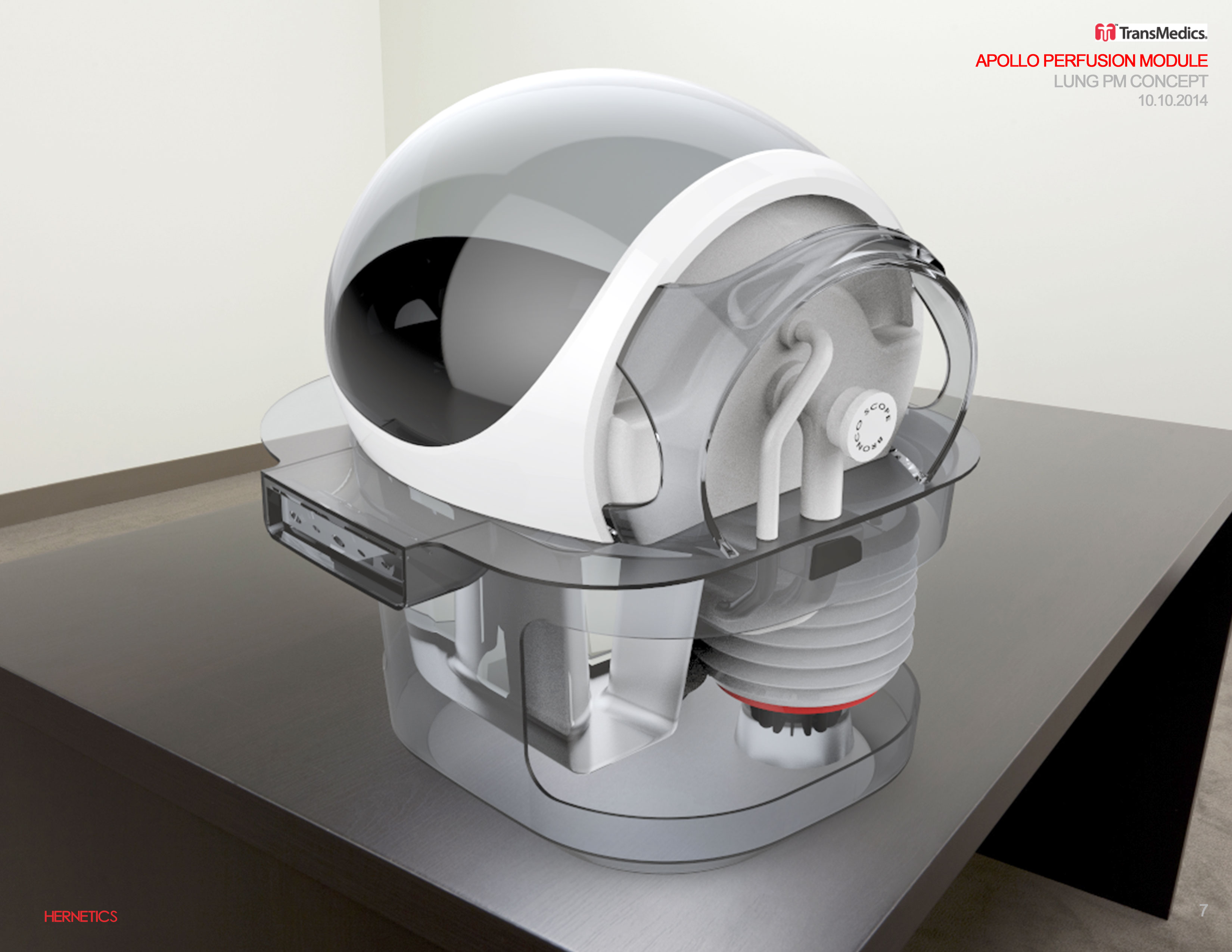
The Organ Care System keeps donor organs warm, perfused, and functioning during transport instead of on ice. The perfusion module had to operate reliably outside the hospital within a portable platform. HERNETICS worked on the perfusion module housing, integrating the pulsatile pump and supporting components into a compact, serviceable enclosure.


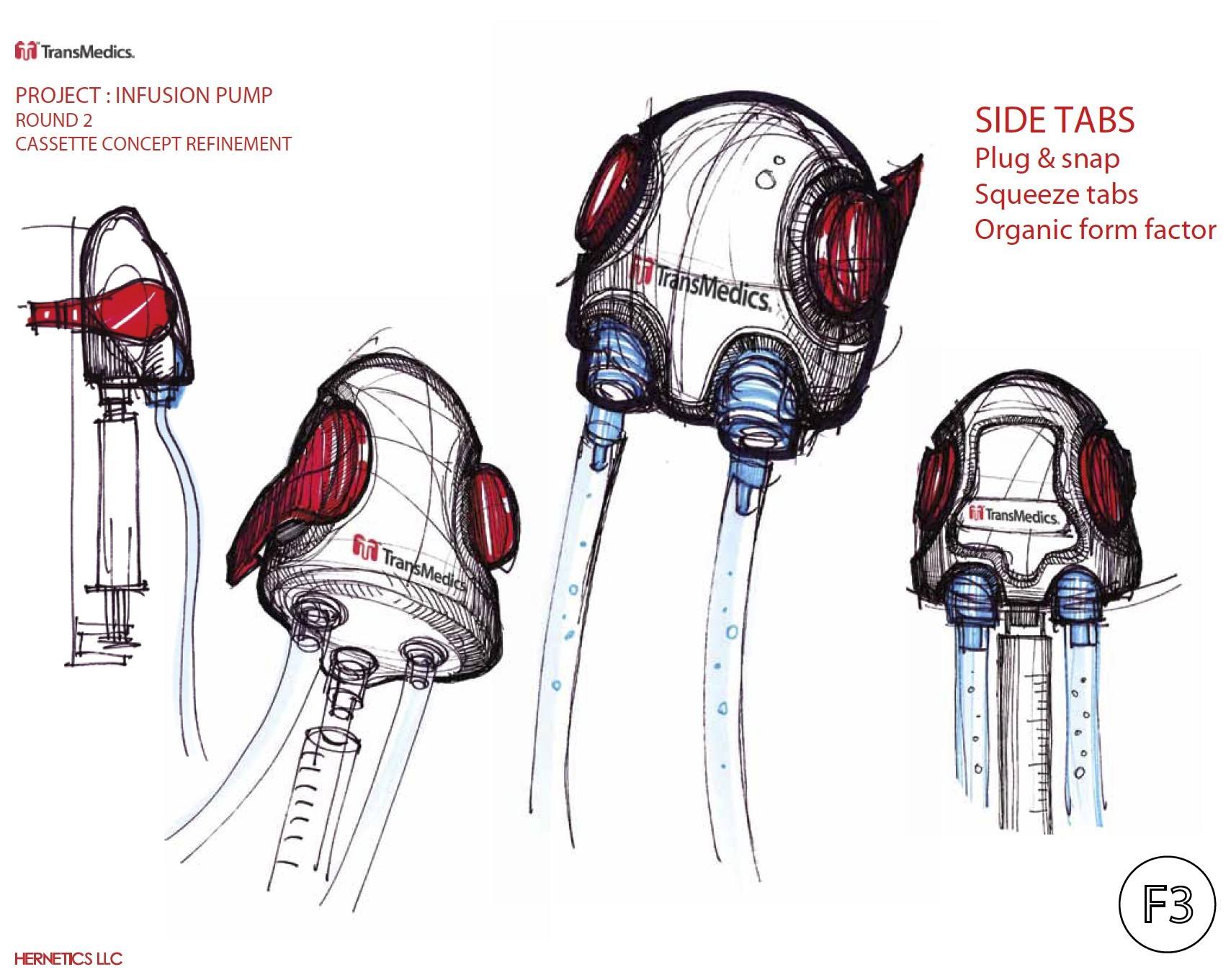
Challenge: The infusion pump delivers the solutions that maintain organ viability during transport and must run continuously within the OCS platform. HERNETICS worked on the complete infusion pump system from early concepts through detailed layouts and prototypes to mass production.





The first FDA-cleared robotic platform for percutaneous coronary and peripheral vascular interventions, built to protect interventional cardiologists from radiation exposure. Corindus was acquired by Siemens Healthineers in 2019 for about $1.1 billion.


VERSAJET Hydrosurgery System by Smith+Nephew is an advanced medical device that uses a high-velocity saline jet to perform precise surgical wound debridement. The sterile saline crosses an operating window into an evacuation tube, creating a localized vacuum that simultaneously cuts, lifts, and aspirates non-viable tissue and debris.


A non-invasive treatment for muscle spasticity after stroke, cerebral palsy, and spinal cord injury, with FDA Breakthrough Device Designation. An ALS application of the technology is backed by Department of Defense clinical trial funding.


Industrial design for capital equipment and portable systems; enclosure and chassis architecture; user interface, display, and control integration; service access and maintenance design; sheet metal, injection molded, and cast part design; prototype builds for user evaluation and testing; and design for manufacturing with vendor coordination.
