The cart is not the thing you bolt the device to at the end. On a mobile clinical system the cart is the product. It carries the weight, sets the working height, decides how the device crosses a threshold, and determines whether the clinician has to reposition themselves or the machine.
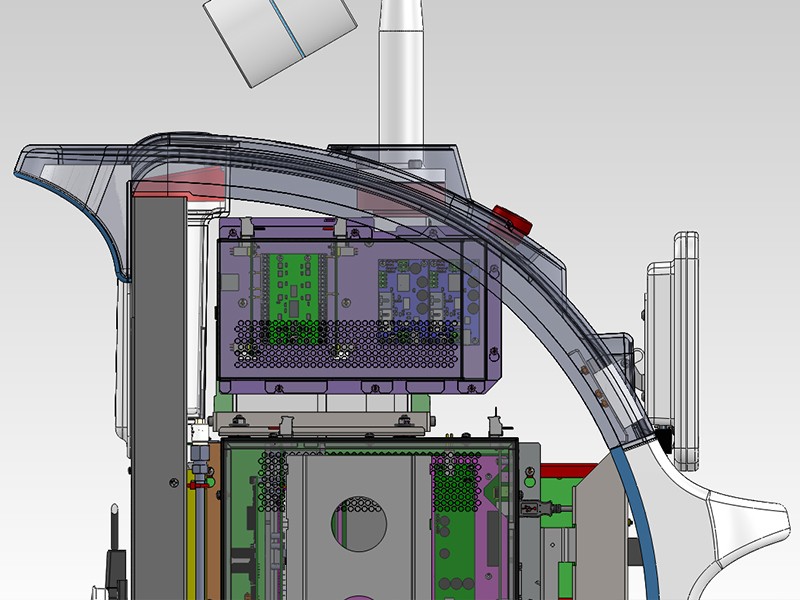
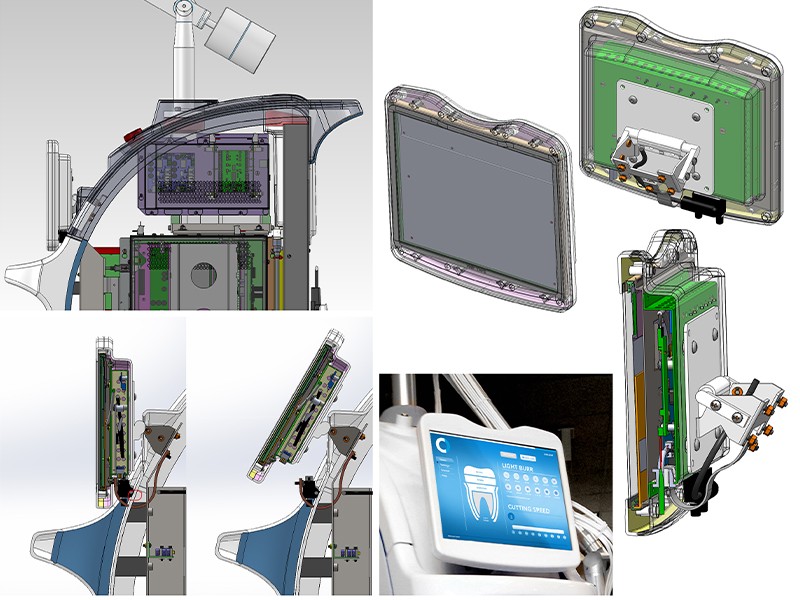
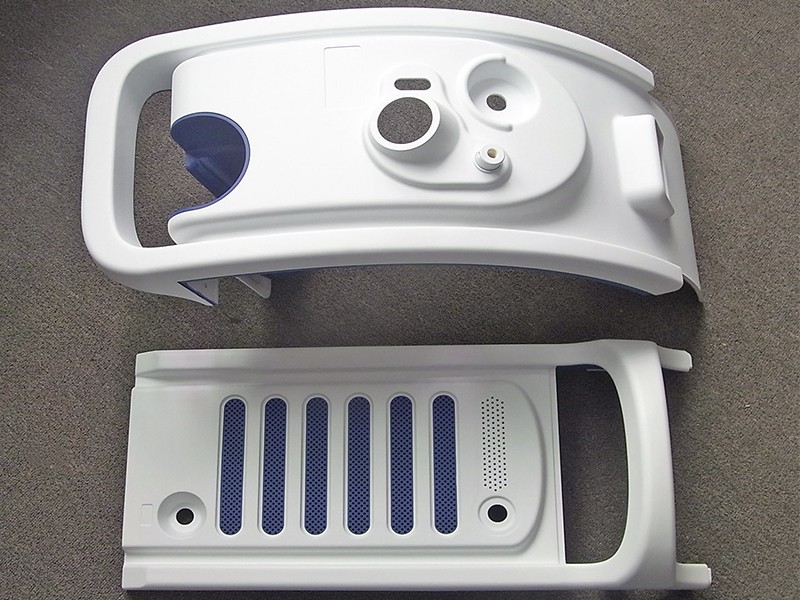
Solea is the first CO2 laser system cleared by the FDA for hard and soft tissue ablation. We designed the complete mobile system: the console and cart, the articulating delivery arm, and the handpiece at the end of it. Over 650 components, more than 150 custom parts, concept to 510k in under two years. Gold at the 2014 Medical Design Excellence Awards.
The cart had to roll between operatories, park stably next to a patient chair, route a laser delivery path through a moving arm, and look like equipment a dental practice would put in front of patients. Those constraints get resolved together or not at all.
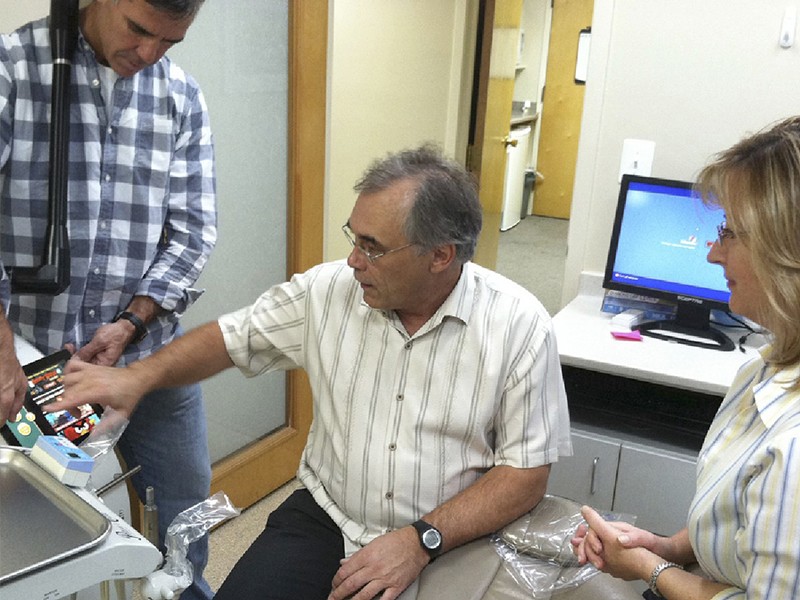
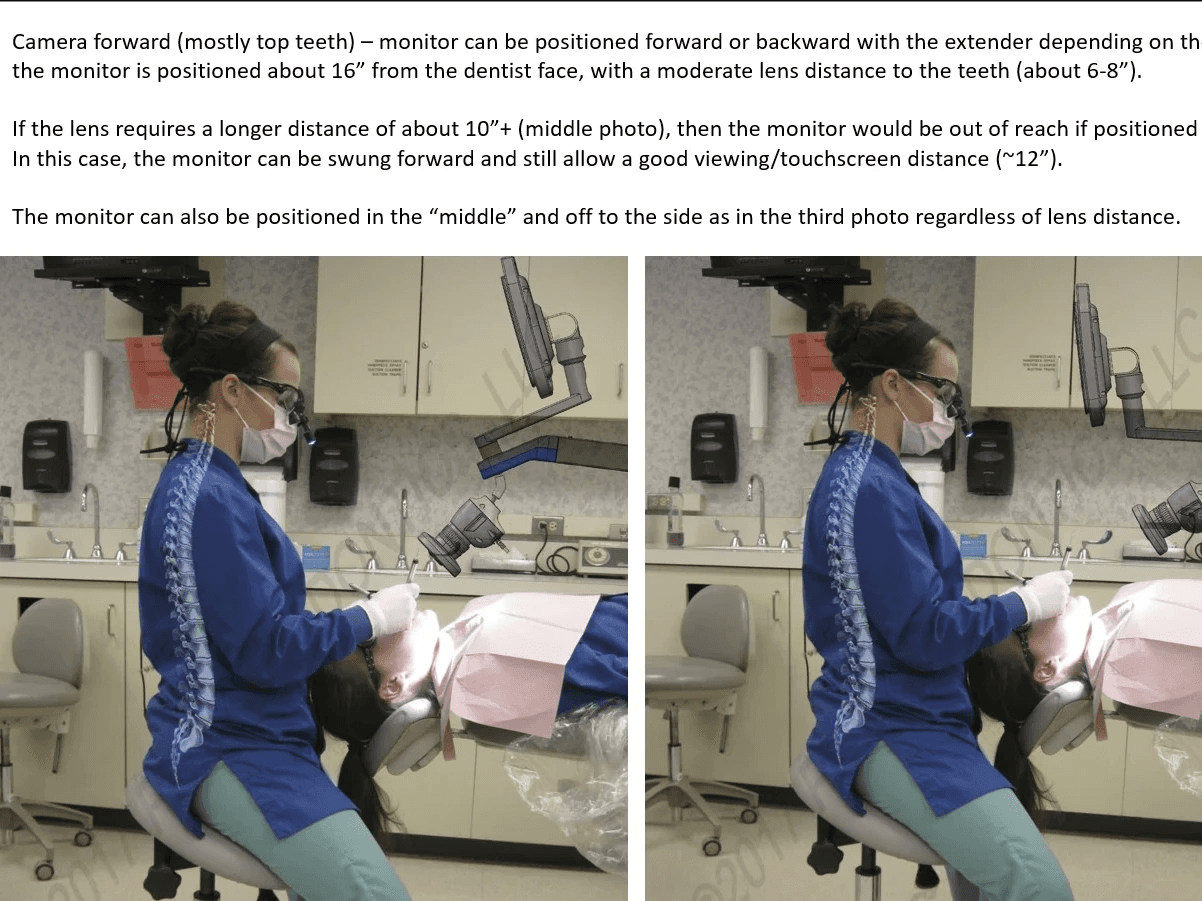
EZ Scope replaces the traditional dental surgical operating microscope with a touchscreen digital imaging system. We designed the arm and base, the monitor positioning ergonomics, and the CMF, integrating with Ergotron mounting hardware. Entered at the 2022 MDEAs.
The design problem was postural. Practitioners hunch over the patient with loupes or eye cups for decades and pay for it in back injury. Moving to a screen at working distance only helps if the arm puts the display exactly where the clinician eyes already are, through a full range of procedures, without adding a footprint the operatory cannot absorb. The unit also breaks down for transport with a single push-button release.
Carts fail compliance on stability more than on anything else, and stability is decided by geometry: base footprint, castor placement, and where the mass sits. That is decided in industrial design, months before anyone books a test house.
Clause 9.4 covers it. A mobile system must not overbalance on a 10 degree incline in normal use or in transport position. Over 25 kg it needs a braking system that holds on that same incline. Over 45 kg it must cross a 10 mm threshold at 0.4 m/s without tipping. There are separate tests for unwanted lateral movement and sliding, and the cart is evaluated loaded, with the device and any accessories in place.
Raising a monitor arm moves the centre of gravity. Adding a drawer of instruments moves it again. These are design decisions with a compliance consequence attached, and they are much cheaper to get right in CAD than in a redesign after a failed report.
Device and cart designed as one system, not sequentially
Articulating arm and delivery path design
Base stability, castor selection, cable and hose management
Working height and sightline ergonomics against real clinical postures
CMF that survives a clinical environment and still reads as premium
Specification and vendor coordination with cart fabricators
Cart fabricators build well from a good specification. What they generally do not do is decide what the device on top should be, or resolve the arm and interface geometry. We work in that window, usually before a cart is tooled, when the split between device and platform is still open, and hand the fabricator a spec that does not change.