

CONTROL handle architecture for complete delivery systems
STEERABLE deflection, advancement, rotation, and deployment mechanisms
SECONDARY features: pull-wire and lead-screw actuation, locking and braking
GUIDEWIRE grippers, torquers, and procedural accessories
MULTI-LUMEN flush, hemostasis, and aspiration hub design integration
ERGONOMIC human factors evaluation with clinical users


Transcatheter mitral valve delivery system, trans-apical and trans-septal
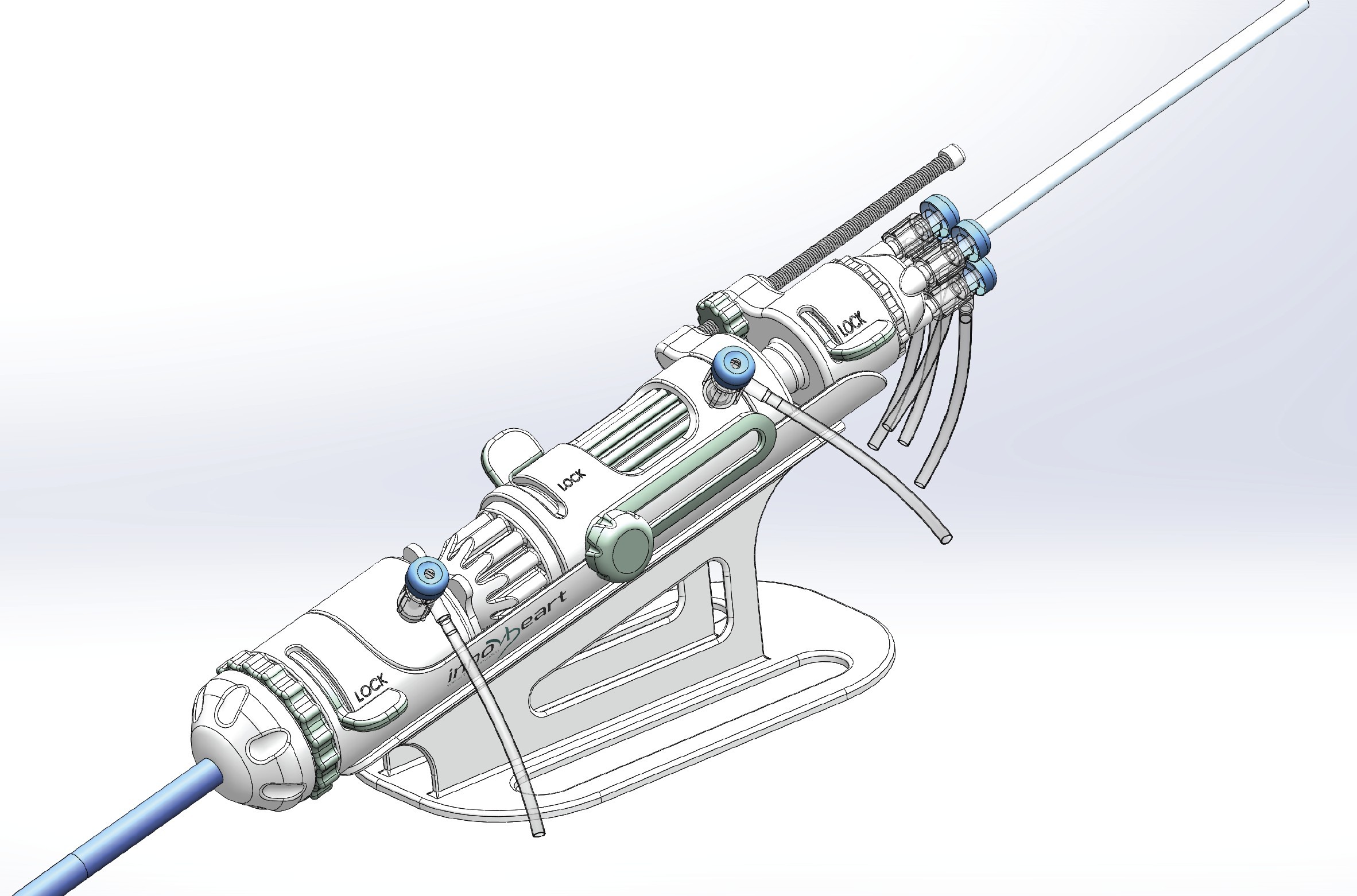
Dual-deflectable delivery and control handle
Wire snare and suture lock handles
Electrosurgical devices with energized guidewire
Suture cutter handles for cardiothoracic surgery
Guidewire gripper, torquer, and deflector mechanisms
Needle handles and cutters for transcatheter access
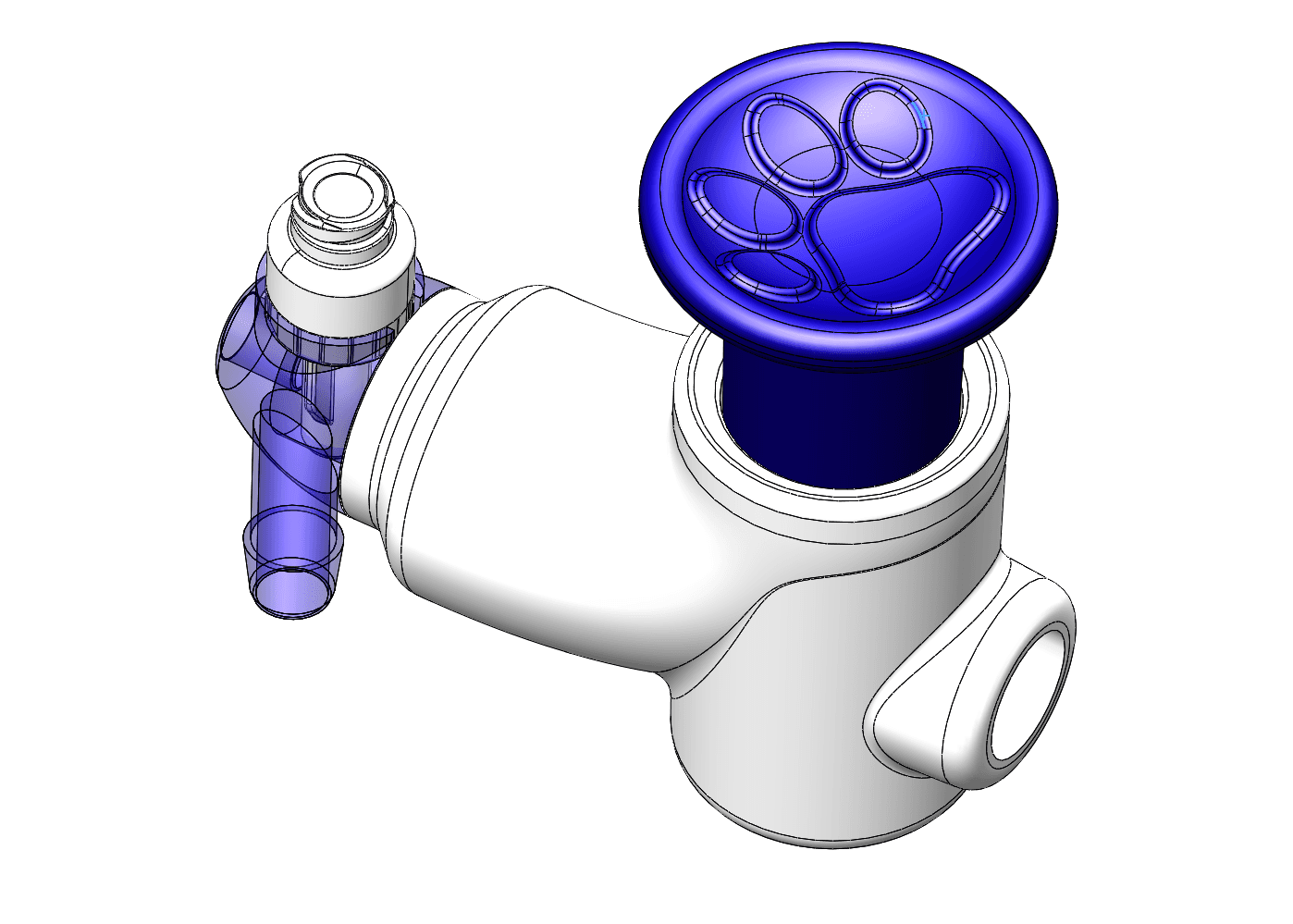
Large-bore and multi-lumen hubs at 16, 20, and 24 French
Dual-sphere mechanical thrombectomy controls
Endoscopic ultrasound (EUS) implant delivery handle through the endoscope working channel


Challenge: The BASILICA procedure uses electrosurgery to split the native aortic leaflet with an energized guidewire, preventing coronary artery obstruction during Transcatheter Aortic Valve Replacement (TAVR). Preparing the wire required physicians to strip its insulation and bend it to a specific angle by hand. Results varied by operator skill, and a failed preparation meant replacing the wire mid-procedure.
Solution: HERNETICS designed a handheld denuder and kinker tool that performs both steps with fixed, repeatable geometry, together with guide catheters, a spring-loaded mechanism, and custom guidewire grippers.
Result: FDA 510(k) clearance and Silver at the 2022 Medical Design Excellence Awards.


Challenge: Transcatheter Mitral Valve Replacement (TMVR) system for patients with moderate to severe mitral regurgitation. Instead of one implant, it's delivered in two components: a pair of annular segments that encircle and restrain the native annulus beneath the leaflets, and a low-profile central valve whose connecting arms lock it to that ring once in place. The delivery system has to place both parts in sequence, inside a beating heart, with the ring positioned around the leaflets before the valve can dock to it.
Solution: HERNETICS supported the early concept development and functional prototypes for the Saturn delivery system across both access approaches. The work covered handle architecture and actuation for staged, two-component deployment, so the ring and the valve could each be positioned and released under the physician's control.
Result: InnovHeart has since raised a $55 million Series C to advance the trans-septal Saturn system.




Specialized precision surgical instrument designed for cleanly trimming fine cardiovascular and vascular sutures during minimally invasive cardiac surgery or video-assisted thoracic procedures. Features ergonomically intuitive syringe grip with spring loaded actuation for ease of use and direct feedback.


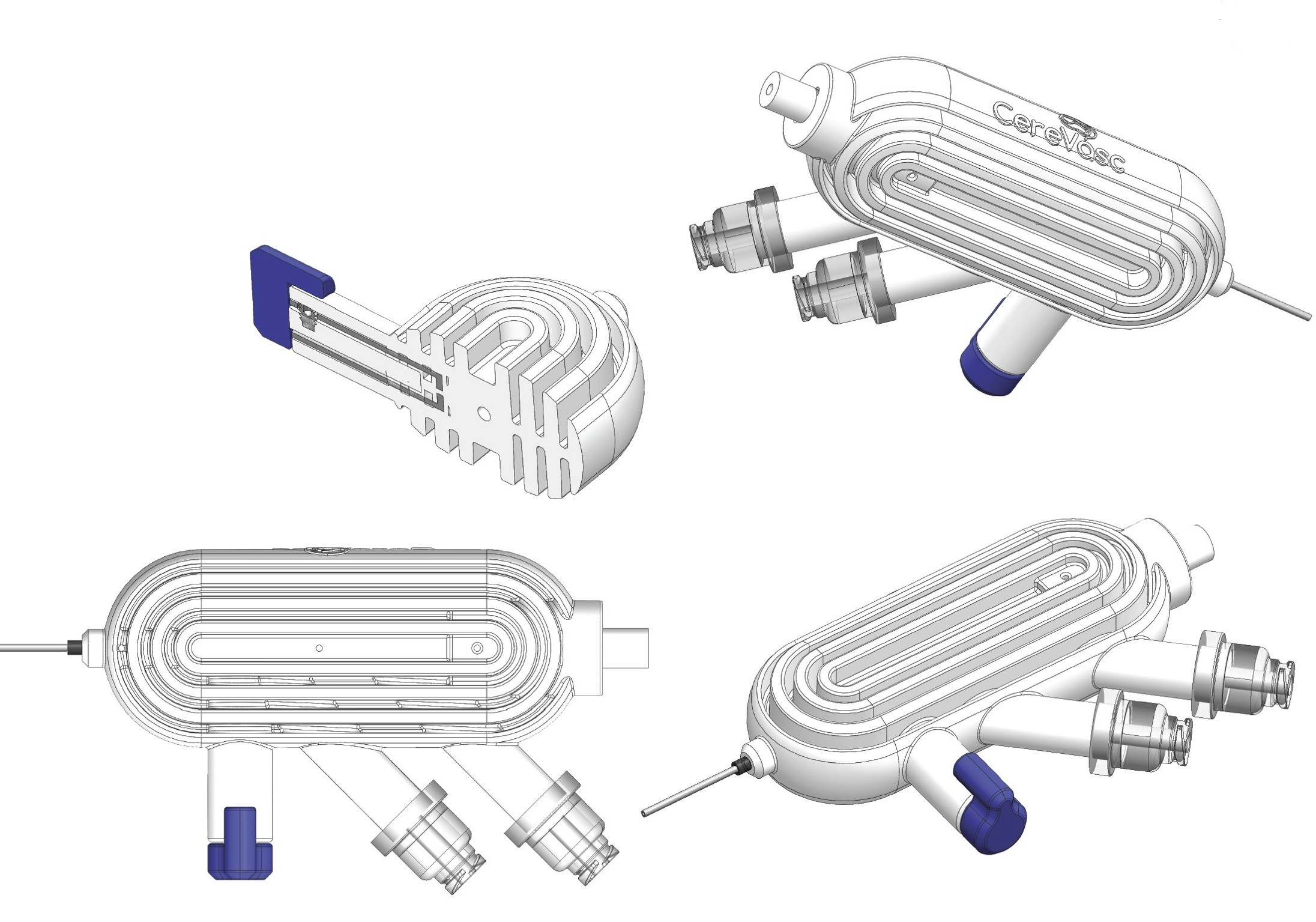
Cerevasc eShunt System is an investigational, minimally invasive endovascular device designed to treat communicating hydrocephalus and elevated intracranial pressure without traditional open neurosurgery. A controlled bypass is created from the subarachnoid space (cerebellopontine angle cistern) into the venous system (inferior petrosal sinus and internal jugular vein) and a specialized implant is used to regulate cerebrospinal fluid (CSF) flow and prevent blood reflux, emulating natural arachnoid granulations.




Clothound is a mechanical thrombectomy system designed to remove acute, sub-acute, and chronic wall-adherent blood clots. The system uses two independent, physician-controlled nitinol spherical baskets (Clear Active Controlled Expansion or ACE™ technology). The distal sphere provides embolic protection and wall engagement, while the proximal sphere breaks down and entrains the clot.




This advanced system is primarily designed to treat cardiac arrhythmias, such as atrial fibrillation, by safely and efficiently neutralizing the abnormal electrical pathways causing irregular heartbeats.
Control system that delivers a self-expanding implant through the working channel of an endoscopic ultrasound (EUS) scope. This minimally invasive treatment creates a gastroenteric anastomosis, a connection between the stomach and small intestine, as a weight-loss procedure like gastric bypass to alter food absorption. HERNETICS designed the main handle components and built and tested functional prototypes with the client's team to confirm deployment performance and user friendly ergonomics.


A Glenn shunt, also known as the Glenn procedure, is an open-heart surgery that connects the main vein from the upper body directly to the lung arteries to help babies born with a single pumping chamber in the heart. The superior vena cava is disconnected from the heart and attached directly to the pulmonary artery.


Positioning and stabilization stand for a cardiovascular delivery catheter system. This specialized mechanical rail platform clips onto the interventional table and supports the modular delivery control handles. This allows the interventionalist to make microscopic, precise adjustments (like torque or axial advancement) without having to manually hold the individual handles for the duration of the procedure.


HERNETICS typically joins catheter programs at the concept or feasibility stage, or when an existing handle design must be resolved before verification. Engagements range from a focused mechanism study to full handle development through procedure validatio to manufacturing transfer.
